TECHNICAL RESILIENCE:
A FIT FOR PURPOSE FRAMEWORK FOR A DECADE
—It’s about time in Curriculum Design,
to create a new time-resilient condition. Tikvah Breimer (MSc MAEd MSc),
independent senior advisor, teacher trainer, director.

“How can I integrate a resilient approach to teaching in these times?
A surprising answer was provided by StudioBlended. Tikvah coached me in making my educational approach and impact last longer.
I realized that acquiring knowledge is a process that obeys the rules of resilience very strongly.”
Dr. Alexander Jachnow, Urban Researcher and Strategist
Institute for Housing and Urban Development Studies (IHS), Erasmus University, Rotterdam

“It was unexpected. We prepared thoroughly in our conversations beforehand, and even so you were able to surprise me. Instead of themes we would have grouped in a very concrete manner, it was all much more layered and strategic. Much more academic than I expected - for the good. We identified undercurrents, hypes and baselines and all in all created much more depth. It was really useful to look at our program like this - the graphical output we received, shows rising and declining lines that require attention - which words/concepts are we going to use, and which aspects do we need to adjust in the background? Merely producing some themes with the team would have been irrelevant to me - what we did now, truly gets us further in the coming year as we reimagine the program. I got what i needed.”
Dr. Stefan van der Spek
Associate Professor of Urban Design at TU/Delft Faculty of Architecture and Built Environment, Program Director of MSc MADE at AMS Institute and co-director of VR-BK at BK-LABS
Are you curious for more? Would you like to get in touch? Feel free to contact our lead directly for any questions or inquiries you may have. tikvah@studioblended.com +31 6 42 47 29 69
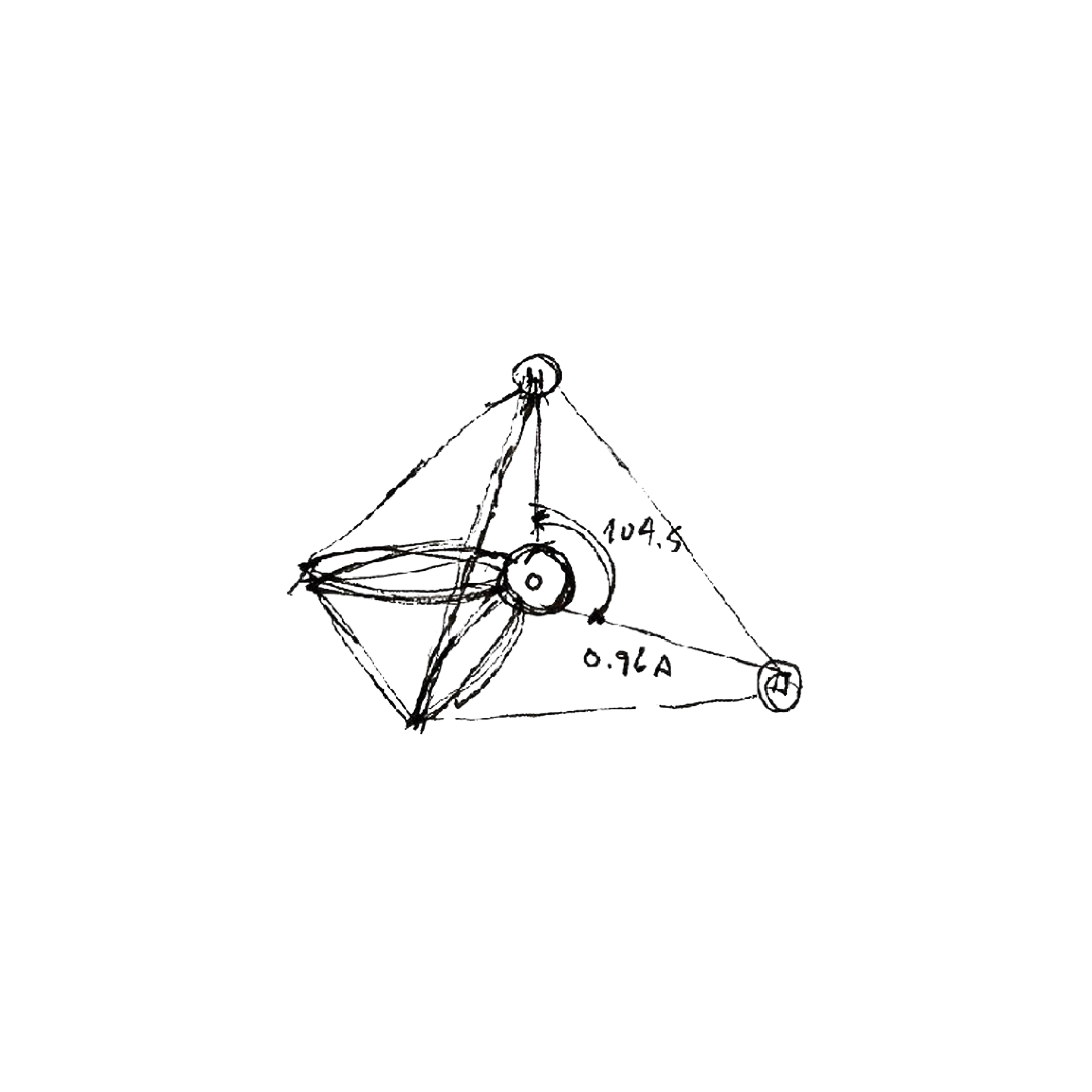
Image: “Architectural Sketch by Cazú Zegers © Cazú Zegers – all rights reserved.”
Imagine an effective and time robust curriculum design that you can just use and continue to build upon with your team not for 2 years, not 5 but even up to a decade. Imagine the sheer simplicity. The smart investment. The education you would then develop based on the curriculum, would naturally incrementally build upon that framework and be allowed to mature. Imagine the relief in your teaching team.
At our Studio we call this transformative design quality ‘technical resilience’.
If you don’t get this right - all the time, effort, expertise of your teaching/research team in design and development, might quickly go to waste with the next wind of change. What could be more important than grounding your academic team?
In Higher Education we live in a culture of jumping on the newest hot topic, rushing research, trying to be the first to publish, following the exciting projects. Given the timeline, it should be obvious that such input is premature at best. At worst, and more likely, it synthesizes almost exclusively early and low quality insights.
Slow down. Discover how step back, and take the long view - and strategize the scope of your curriculum. Know the robust base of the knowledge domain that backs up the body of knowledge of your course/degree - and be forward looking: where do you truly envision your field to go in 10 years time?
At StudioBlended we focus not so much on where you want the education to go (i.e. a transition you wish to stir), but especially on the natural course of big ideas in your academic field, and making sound choices and decisions about that. What does that mean for the scope of your course/degree? What does it mean for your workinglife over the coming 10 years? Is this the right direction for you, and your academic team?
We advise you on how you can design for a resilient curriculum that lasts up to a decade - even if your subject area experiences paradigm shifts and transitions and therefore requires you to rejuvenate content regularly.
The fit for purpose framework (see below and in our podcast for an analogy with land cadastres) we propose is not static, you can still adjust dynamically to your field as required. But you have a robust overal framework to sustain it. The way we go about modular design, helps you to understand better which modules you’d like to develop deeply and which you hold more lightly.
How we are different
How is our Studio different from any other educational specialist you will find at your own campus or beyond?We are unique in our approach: we bridge the silo between your content field and the educational realm of expertise. Not only do we come alongside you to advise on your educational design, we partner with you with a broad comprehension of your academic field. We go over and beyond the common constructive alignment, into your knowledge domain and into its dynamics. We don’t just take your current content as a given, and develop it into a course/degree. No, we first transform the content with you.
Our approach is deeply academic.
Output: 2-5 pager
We design what we call a ‘fit for purpose framework’ for the curriculum, a body of knowledge for your course/degree that is relevant for up to a decade.Find below an example of the output we craft with you, it really is just a 2-5 pager. It combines big ideas, paradigm and hype cycle analysis, guiding questions, understandings, knowledge, skills and capabilities. All, with clearly the time frame of the course or degree in mind, and a learning journey - after all the scope of your research in the knowledge domain is very different than an educational scope.
Realising such a fit for purpose framework, requires dialogue, alignment and importantly also an iterative process. We go from high over big ideas and knowledge domain statements, to the design of the learning objectives of your course or degree, and back to high over again.
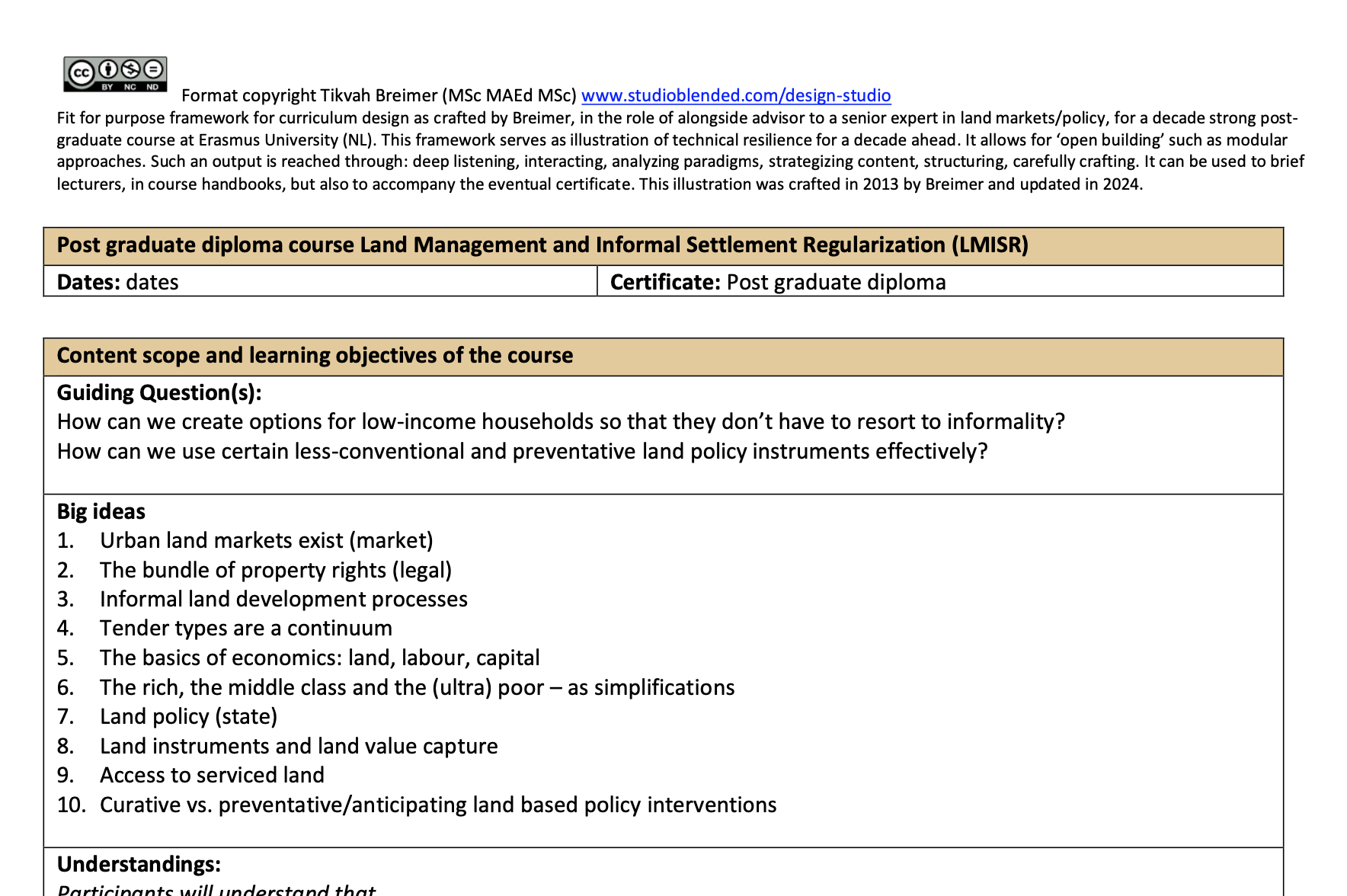
Image: click to expand, and get a full illustration of our ‘fit for purpose‘ framework for technical resilience in your course curriculum. Such a framework allows for ‘open building’ such as with modular approaches to education.
Why would you want this
Our idealist pragmatic approach has been developed from the ground up, seeing and living first hand what goes on inside academic institutions. We always see two sides of the same coin: technical and human (see human resilience). Ultimately, they are also financial.Our open building approach to technical resilience is cutting edge, and allows you to enjoy the benefits of delivering a mature course/training, including its impact on educational results and accreditations.
The fit for purpose framework is a very smart investment in your triple constraint of quality, time and cost. After all, based on this framework, you can start to make more sound decisions on where to invest in in terms of development, and what to hold more lightly.
Equally, your teaching staff is in all of this, with their working life. What can we expect to see over the course of the next decade? What do they want to put their time, expertise, attention and passion in? Our approach is deeply resonating with teacher satisfaction, staff retention and their wellbeing.
How can you realise such an output and outcome?
We offer a unique Design Studio, which you can embark on together with your teaching team, but especially as a core team of researchers/lecturers.We take literally all the material you have been producing over the past years, and synthesis it for you (i.e. academic articles, podcasts, webinars, blogs and beyond).
We read deeply into your field, and provoke you with a proposed ‘fit for purpose’ framework in all its simplicity.
From there, we start to question you, make suggestions, ask: “I don’t know what you mean”. Whilst it may be hard for academics to take final decisions, we are dedicated to conclusions and say: “Like this simple line?”.
We bring out what is there already, in your team. All in all, we partner with you as equal partners, you and your team bring in the academic specialisation, and our independent senior advisor starts to take it from there.
The outcomes are deep dialogues and alignment. A lot of decision-making, which can be very scary for academics, to finally realise and choose what they truly want and need.
If you’d like to have a light, playful first encounter with any of this, why not book a workshop big ideas with us?
What can you do with this output?
Once the output is there, you have a scope for the body of knowledge of a course or degree. This framework can then be taken into a Design Journey, in which you interpret it for specific modules in your course or degree. For instance, you can start to formulate learning objectives per module. The process is very iterative, and often times you see that the act of translating into concrete modules, further refines the overall scope.Curios? Feel free to contact our independent senior advisor directly:
tikvah@studioblended.com
Key projects
StudioBlended is currently partnering with an institute for capacity building within a European University, to co-create an impactful MOOC for this client (2025-mrch 2026).The assignment includes an intensive Design Studio in multiple sessions, to arrive at the technical curriculum design. From there, a learning journey is designed as part of our design journey with the client.
European funded program. € (follows)
More information follows soon.


On Friday August 30, 2024, Tikvah Breimer (MSc MAEd MSc) joined the academic teaching team of MSc Metropolitan Analysis Design and Engineering (MADE) at the Amsterdam Institute for Metropolitan Studies (AMS) to kick-off the new academic year, and deliver a keynote coupled by a group excercise around strategizing and envisioning 'big ideas' in the Master's curriculum - in order to be equipped to simplify and innovate.
“It was inspiring and fruitful [for me as participant]. I realised a course has baseline building blocks versus the trends and hypes that come and go. I realised where to invest in most. I am taking this further for my own field for sure.”
dr. Roberto Rocco
Senior Associate Professor of Spatial Planning and Strategy at TU/Delft Faculty of Architecture and Built Environment, Governance specialist focusing on Spatial Justice and Governance for Just Transitions.
As early as 2013, the Institute for Housing and Urban Development Studies (IHS) was an early adopter of MOOCs, and invested in experiments.
Upon invitation by the head of Education, our independent senior advisor (then staff member) delivered a proposal called ‘Training as a product - A suggestion’. The proposal included a suggestion for an ‘open building’ training product offered by this institute for capacity building/development.
The proposal dates back to 2014, but is still decade strong and relevant today, and resonates in all our technical resilience design.
It was also in this period of time that Tikvah Breimer (MSc MAEd MSc) started experimenting with a fit for purpose framework, inspired by the technical curriculum design approach of the International Baccalaureate Organisation in Switserland. The result was the fit for purpose framework for the land course as shown above, co-created with the then senior expert in land.
![]()
Upon invitation by the head of Education, our independent senior advisor (then staff member) delivered a proposal called ‘Training as a product - A suggestion’. The proposal included a suggestion for an ‘open building’ training product offered by this institute for capacity building/development.
The proposal dates back to 2014, but is still decade strong and relevant today, and resonates in all our technical resilience design.
It was also in this period of time that Tikvah Breimer (MSc MAEd MSc) started experimenting with a fit for purpose framework, inspired by the technical curriculum design approach of the International Baccalaureate Organisation in Switserland. The result was the fit for purpose framework for the land course as shown above, co-created with the then senior expert in land.

Join related studies / Our Audio Podcast

🎙 Keynote: Big ideas and modular curriculum design.
Prefer to read? Transcript
Listen on: Acast Spotify Apple
Release summer ‘24
Further reading: fit for purpose
For our ‘fit for purpose framework’ for your unique course/degree, we see an analogy with land cadastres; we identify the way your curriculum works within a relatively short time and at relatively low costs and then propose a robust and resilient framework as you continue to develop and deliver your course or degree.A fit for purpose approach enables you to begin to work regardless of the overall context as you find the optimum way to apply the framework in your unique environment, improvise with technique, and innovate.
Our bespoke ‘Fit for purpose’ stands strong for up to a decade ahead, and is able to incorporate ongoing development in the content. As such it also guides sound financial health for the course in terms of ensuring investments are smart (i.e. what to develop, when?).
The framework allows for ‘open building’ with your education. Open building, introduced in architecture amongst others by John Habraken in the 1960s, enables flexible, renewable building by seperateing the structure (support) from the interior (infill), allowing easy modifications. Integrating this with digitization and automation promotes dynamic, resident-influenced designs and cost-effective costomization.
Likewise, the ‘fit for purpose framework’ can support open building by the teachers, increasing their flexbility and sustainability. The coordinates of the framework, allow for modular education, whilst the infill by teachers is unique per teacher and allows for adaptability, and as long as the overall guidelines remain in tact, the overall course/degree coherence is amplified.
By now our fit for purpose framework is simple, and technically perfect - like a pencil.
What is technical perfection?
It means that it keeps its qualities in whatever context.
If you throw it in water, and allow it to dry it can still write.
Should you keep it for a decade, and then try it again: it writes. It is perfect. Which is why it is not further developed, you just see variations of pencils, no difference in the original design.
It is already technically perfect (after Philippe D’Averio, highlighted by Antonio M. architect).
Likewise, our fit for purpose framework for curriculum design is technically perfect.
Related publications
Open building as an approach for more effective core-housing implementation? An exploration. Masters thesis in Urban Management and Development, Erasmus University.
Our lead and founder, takes a lively interest in architecture, and made an extensive exploration of the open building approach in architecture (with distinction) at the Institute for Housing and Urban Management (IHS) of Erasmus University Rotterdam.
Breimer, Tikvah 2015. Informal Urban Expansion: Anticipation and Preparation. Workshop Urbanisation in Europe and the World. Joint Research Centre (JRC) of the European Commission in Ispra, Italy, May 28. Discusses the hype cycle of concepts and a paradigm shift in this specific technical (peri)urban field.

Breimer, Tikvah 2014. Preparing for rapid urbanisation in the land market of the peri urban interface (PUI). Archcairo, 6th international conference. The thinkpiece and talk discuss the application of paradigm shifts in this specific technical (peri)urban field.
Breimer, Tikvah 2006. On icaruswings. A new student generation in Nicaragua and the revolutionary ideas of then and today. Master thesis in Anthropology and Sociology of Non-Western societies.
An exploration and theory forming study of subsequent student generations in Nicaragua and their ideas for legitimate democratisation in their own country. It is an in-depth, both through theory on generations and through participatory observations, study of what it means to experience paradigm shifts first hand and how to then understand that at a meta and macro level.
Cum laude. Thesis of the year award, Anthropology and Sociology of Non-Western Countries, University Utrecht, 2006. Available upon request.
We are here especially for you as unique course/training coordinator, to come alongside you and partner with you, as you work on a curriculum, so that you can offer effective and time/resilient education in its simplest form.
More design angles we use
Technical resilienceBig ideas
Paradigm shifts/decade strong
Simplicity and decluttering
Human resilience
Modular
Innovative and deep pedagogy
Assesment / evaluation
Time dimension
Evidence-based design
Financial health and resilience by (re)design
Multi- Inter- and transdisciplinary
Flexibilisation and personalisation
Blended

Photo: Brazilian Brutalism at FAU USP, a University Faculty that defined its own Architectural Style. Flickr user Fernando Stankuns.
“I received alongside advise on my course design by Tikvah Breimer, and now deliver the actual course.
I feel secure the material is solid and lasting, so I can build on it, incrementally.
I dare to learn by doing, everything you (Tikvah) said is true – I’m calmer, more self-confident, and daring to experiment more. The structured approach the course brought, now brings me deep excitement to keep growing and learning myself too, not just students. It’s so rewarding.
You are so right we don’t need more heavy and extensive technology for excellent higher education,
We need excellent technique and pedagogy, resilience.
I feel secure the material is solid and lasting, so I can build on it, incrementally.
The advisory and training was a gift from heaven. I want you to train our entire team of professors!”
prof. dr. Patricia Samora
Senior lecturer and researcher
Pontificia Universidade Catholica de Campinas
Faculty of Architecture and Urbanism
Greater Sao Paulo Metropolitan Area
Brazil

References infographic at the top BBreimer, T.A. (2006) Op icarusvleugels: een nieuwe studentengeneratie in Nicaragua, en de revolutionaire ideeën voor democratie van toen en nu. [On icaruswings; A new student generation in Nicaragua, and the revolutionary ideas for democracy of then and today]. Master thesis, Faculty of Anthropology. Utrecht: Utrecht University [In Dutch]. Available upon request.
Davidson, F. (1999), ‘Conceptual Cycles in Urban Development Management; are we getting better and better – or just going round in circles? Implications for Capacity Building and Research’, N-Aerus (Network Association of European Researchers on Urbanisation in the South) conference, Venice. Available: https://www.researchgate.net/publication/369123732_Conceptual_Cycles_in_Urban_Development_Management_Are_we_getting_better_and_better_-or_just_going_round_in_circles_Implications_for_Capacity_Building_and_Research(Accessed: October 27, 2025).
Hebinck, A., Diercks, G., von Wirth, T., Beers, P.J., Barsties, L., Buchel, S., Greer, R., Steenbergen, F., and Loorbach, D. (2002), ‘An actionable understanding of societal transitions: the X-curve framework’, Sustain Sci 17, pp. 1009–1021. Available: https://link.springer.com/article/10.1007/s11625-021-01084-w (Accessed: October 27, 2025).
Silverstri, G., Diercks, G. and Matti, C. (Drift) (2022). X-curve, a sense making tool to foster collective narratives on system change. Rotterdam, The Netherlands: Drift for Transition. Available: https://drift.eur.nl/en/publications/toolkit/(Accessed: October 27, 2025).
Resilient education that stands the test of time - by design.
Prefer to have direct contact?
Feel free to contact us directly
Tikvah Breimer (MSc MAEd MSc)
Independent senior advisor, teacher trainer, director.
tikvah@studioblended.com
+31 6 42 47 29 69
STUDIOBLENDED Non Profit Foundation
Registration Chamber of Commerce
KvK-number 86242598 (Dutch)
VAT identification number
NL 86 39 07 29 5 B01
Bankaccount
NL40 INGB 0709 6156 04
SWIFT/BIC: INGBNL2A
StudioBlended Foundation
Feel free to contact us directly
Tikvah Breimer (MSc MAEd MSc)
Independent senior advisor, teacher trainer, director.
tikvah@studioblended.com
+31 6 42 47 29 69
RECEIVE A CALL TO DISCOVER MORE
STUDIOBLENDED Non Profit Foundation
Registration Chamber of Commerce
KvK-number 86242598 (Dutch)
VAT identification number
NL 86 39 07 29 5 B01
Bankaccount
NL40 INGB 0709 6156 04
SWIFT/BIC: INGBNL2A
StudioBlended Foundation